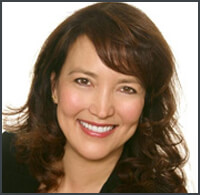
Leslie Daff, JD, MBA, Certified Specialist in Estate Planning, Probate and Trust Law
LDaff@estateplaninc.com
Randy Gardner, JD, LLM, MBA, CPA
RGardner@estateplaninc.com
Katherine J. Hughes, JD, LLM, Of Counsel
KHughes@estateplaninc.com
Current Updates:
See Leslie's inclusion again in OC Metro's annual August edition naming O.C.'s TOP LAWYERS.
On Friday, October 1, 2010, Leslie will be speaking on the topic of "Advanced Estate Planning" as part of private fiduciary Peter Kote's "It's Your Estate" series of workshops in Orange County. Please call (949) 497-5056 for more information.
Read our recent article in the June 2010 edition of the Journal of Financial Planning about tax ramifications and opportunties under the new Healthcare Act.
Effective May 1, our Overland Park office, headed by Randy Gardner, JD, LLM, MBA, CPA, is located at Lighton Tower, 7500 College Boulevard, Suite 500. Please call (913) 766-5834 for more information.
If you own a cherished family property such as a beach home, lake cottage, or mountain cabin, please read our article in the February 2010 edition of the Journal of Financial Planning entitled Keeping the Vacation Home in the Family - Another Use for LLCs: http://estateplaninc.com/global_pictures/Vacation%20Home.pdf
Click on the ESTATE PLANNING BOOK tab at left to read about the recent estate planning book we edited, entitled Estate Planning Strategies, Collective Wisdom, Proven Techniques, available on Amazon.com.
HOW TO PROTECT YOURSELF AND YOUR LOVED ONES
- Do you have a Will?
- What happens if you don't have a Will?
- What happens if you do have a Will?
- What is a Revocable Living Trust and how is it different from a Will?
- What does a basic estate plan typically consist of?
- How much does an estate plan cost?
- How do you find a qualified yet reasonably-priced estate planning attorney?
- Why are a Power of Attorney for financial matters and Advance Health Care
Directive necessary?
- What is a HIPAA Authorization?
- What kind of tax planning is involved?
- What about planning for blended families?
- What about advanced estate planning for larger estates?
- How often should you review your estate plan?
Do you have a Will? A recent survey indicates nearly 60% of American adults do not.
What happens if you don't have a Will? If you die without a Will, your assets will pass by State laws of interstate succession. In California, if you are married, your assets will be divided among your spouse and children. Your children will receive their inheritance outright at age 18.
Property passing to a spouse will not go through formal probate. However, if you both die at the same time, or if you are single, assets in excess of $100,000 that do not otherwise pass outside of probate (e.g., by beneficiary designation, titling, contractual arrangement) will go through court-administered probate proceedings.
Probate proceedings are public record so anyone can access information about your estate and beneficiaries. The process can take from six months to several years to complete and your beneficiaries may not receive their inheritance until the probate is completed.
By law, court-appointed administrators and attorneys hired to handle the probate are entitled to fees based on the gross value of the probate assets (not net of mortgages and indebtedness). So, for example, if the only probate asset were a home valued at $500,000, the administrator and attorney would be entitled to statutory fees exceeding $25,000 no matter what you owed on the home. Statutory probate fees on a gross estate of $1 million, $3 million, or $10 million would total $46,000, $86,000, or $226,000, respectively. (Note: Property held in a revocable living trust avoids probate entirely, as explained below).
What happens if you do have a Will? If you have a Will, your named executor will distribute your estate to your designated beneficiaries in the manner specified. Although tax planning can be done in a Will, and you can control the manner and timing of distribution to beneficiaries, having a will does not avoid the expensive, public, and time-consuming process of probate.
What is a Revocable Living Trust and how is it different from a Will? People often use a Revocable Living Trust to avoid probate, for tax planning, and to control the manner and timing of distribution to beneficiaries. Unlike a Will, which is which is a public document filed with the court, the Trust is private. Property held in the name of the Trust is not subject to probate proceedings (and the associated costs and time delays).
You will need to transfer your assets (e.g., real estate) into the Trust, generally with the assistance of an attorney. You will continue to control and manage the assets as you do now, but upon your incapacity, your named successor trustee can manage the assets without a court having to appoint a conservator. Upon your death, your successor trustee will distribute the assets to your beneficiaries privately according to the terms of the Trust, thereby avoiding probate.
A “Pour Over” Will is typically used in conjunction with a Living Trust to catch any assets that may not have been transferred to the Trust, so that they can be distributed according to the Trust’s terms. You also nominate Guardians for minor children in your will.
What does a basic estate plan typically consist of?
1. Revocable Living Trust
2. Pour Over Will
3. Power of Attorney for financial matters
4. Advance Health Care Directive or Power of Attorney for Health Care
5. HIPAA Authorization
How much does an estate plan cost? You should generally be able to obtain a personalized basic estate plan drafted by a qualified estate planning attorney from one thousand to several thousand dollars depending on the complexity.
How do you find a qualified yet reasonably-priced estate planning attorney? It is important to work with an attorney who specializes in estate planning, trust, and probate law, preferably a "Certified Specialist in Estate Planning, Trust & Probate Law" by the State Bar Board of Legal Specialization (as explained under the "CERTIFIED SPECIALIST" tab) because the law in this area is very specialized, changes often, and involves complex tax matters (income/capital gains tax, property tax, generation-skipping transfer tax, gift tax, and federal estate tax). Be sure to choose an attorney who will provide you with a complementary consultation by phone or in person and who will charge a flat fee rather than an hourly rate whenever possible so you don't have to worry about unknown or unexpected costs. Lastly, be sure to find out whether the quoted fee includes “funding” or transferring your assets into the trust.
Why are a Power of Attorney for Financial Matters and jAdvance Health Care Directive (or Power of Attorney for Health Care) necessary? A Power of Attorney for financial matters enables a designated individual to handle your non-trust assets (e.g., pay your bills from your checking account, transfer assets to your living trust) in the event you are incapacitated. An Advance Health Care Directive or Power of Attorney for Health Care allows a designated agent to make health care decisions for you in the event you are incapacitated. In addition to granting the agent the power execute health care forms and consent to surgery and the like, it can be used to express your preferences regarding life-sustaining care.
What is a HIPAA Authorization? This is a document required by the Heath Insurance Portability and Accountability Act (HIPAA) enabling your named fiduciaries (e.g., successor trustee of your living trust and agents on your power of attorney and advance health care directive) to obtain protected health information on your behalf in order to make informed decisions about your medical care and to pay your medical bills.
What kind of tax planning is involved? Estate plans are drafted to minimize taxes, including federal estate taxes, which under current law will be assessed at 55% on estates exceeding the "applicable exclusion amount" of $1 million as of 2011. Many people do not realize that life insurance proceeds are included in the taxable estate, which can often bring an estate well over the exclusion amount. With proper planning, life insurance can be removed from the taxable estate through the use of an irrevocable life insurance trust. Moreover, with simple A-B sub-trust provisions drafted into a couple’s revocable living trust, spouses are able to take advantage of each other’s exclusion to minimize taxes. Without such planning, one spouse’s $1 million exclusion may be lost.
What about advanced estate planning for larger estates? Certainly those whose estates exceed the exclusion amount can benefit from a variety of techniques designed to minimize or completely eliminate estate taxes as discussed under the "Advanced Estate Planning" tab and also in an article I co-authored on advanced estate planning techniques published in the Journal of Financial Planning entitled Many Estate Planning Strategies Provide Benefits in Low-Interest-Rate Environment under the ARTICLES tab.
What about planning for blended families? Special consideration is taken in drafting estate plans for blended families to address the sometimes competing interests of the current spouse and children from prior marriage(s). Without such planning, there can be unintended and unfortunate consequences.
How often should you review your estate plan? You should review your estate plan periodically because of changes in tax and other laws. Certainly estate plans should be reviewed when there has been a significant change in assets, or when there has been a major life event such as divorce, remarriage, or the birth or adoption of a child. Many estate planning attorneys will review existing estate plans and provide recommendations at no charge. |