ABOUT OUR ATTORNEYS CONTACT US

Estate Planning Lawyers Orange County, Irvine, Laguna Beach, Overland Park


Estate Planning Lawyers Orange County, Irvine, Laguna Beach, Overland Park

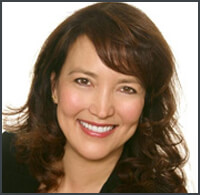
Leslie Daff, JD, MBA, Certified Specialist in Estate Planning, Probate & Trust Law
LDaff@estateplaninc.com

Randy Gardner, JD, LLM, MBA, CPA, Of Counsel, Estate Planning, Tax Planning & Tax Preparation
RGardner@estateplaninc.com


Current Updates:

Read the sixth of thirteen tax and estate planning tips we're publishing weekly during tax season under the READ MY BLOG tab at left.  In addition to estate planning and administration, our office provides reasonably-priced tax planning and preparation services.  Call to schedule a complimentary phone or office consultation.

Our upcoming article, which will be published in the February 1, 2012 edition of The Journal of Financial Planning, focuses on selecting and maintaining appropriate fiduciaries (trustees, executors, and agents on powers of atttorney for property and health care) in your estate plan.  Recent litigation against successor trustees for breach of fiduciary duties, including the "prudent investor rule," highlight the importance of not only carefully selecting fiduciaries but also building mechanisms into your estate plan to have them removed and replaced when necessary - without ending up in court.

Read our article in the October 2011 edition of The Journal of Financial Planning entitled Your Parents' Estate Plan, which delves into sensitive issues such as how to get elderly parents to create (or update) and estate plan to handle incapacity issues and to pass their estate to beneficiaries most efficiently, cost-effectively, and harmoniously under the ARTICLES tab at left.

See Leslie's inclusion for the third consecutive year in OC Metro Magazine's August 2011 list of the Region's Top Attorneys.

Learn more about the book we edited - Estate Planning Strategies: Collective Wisdom, Proven Techniqes - by clicking on the ESTATE PLANNING BOOK tab at left.  Randy's TAX PLANNING BOOK - 101 Tax Savings Ideas - is now in its tenth edition.  Both books are available on Amazon.com.

Call (949) 497-5056 to schedule a complimentary consultation in our Irvine office (weekdays 8:30 a.m. - 5:00 p.m.), our Laguna Beach office (weekdays 8:00 a.m. - 6:00 p.m. and Saturdays and Sundays 9:00 a.m. - noon),  and in Torrance (Sundays, by appointment).

Call (913) 766-5834 to schedule a complimentary consultation in our Overland Park office (weekdays 8:00 a.m. - 6:00 p.m. and Saturdays and Sundays 9:00 a.m. - noon). 

ESTATE PLANNING BASICS:  How to Protect Yourself and Your Loved Ones

- Do you have a Will?
- What happens if you don't have a Will?
- What happens if you do have a Will?
- What is a Revocable Living Trust and how is it different from a Will?
- What does a basic estate plan typically consist of?
- How do you find a qualified yet reasonably-priced estate planning attorney?
- Why is a Power of Attorney for Financial Matters necessary?
- Why is a Power of Attorney for Health Care and a Living Will
  (or an Advance Health Care Directive Necessary)?
-
What is a HIPAA Authorization?
- What kind of tax planning is involved?
- What about advanced estate planning for larger estates?
- How can you keep a cherished family property in the family for generations?

- What about planning for blended families?
- What can you do to protect your beneficiaires who have special needs
  or who need protection from potential divorce, creditors, or "predators"?
- How do you provide for your pets?
- Are you concerned about asset protection?

- How often should you review your estate plan? 

Do you have a Will?  A recent survey indicates nearly 60% of American adults do not. 

What happens if you don't have a Will?  If you die without a Will, your assets will pass by State laws of interstate succession.  If you are married, your assets will be divided among your spouse and children.  Your children will receive their inheritance outright at age 18.

Assets
in excess of $100,000 that do not otherwise pass outside of probate (e.g., by beneficiary designation, titling, contractual arrangement) will go through court-administered probate proceedings.  Probate proceedings are public record so anyone can access information about your estate and beneficiaries.  The process can take from six months to several years to complete and your beneficiaries may not receive their inheritance until the probate is completed.

In California, a state where probate is particularly onerous, court-appointed administrators and attorneys hired to handle the probate are, by law, entitled to fees based on the gross value of the probate assets (not net of mortgages and indebtedness).  As an example, if the only probate asset was a home valued at $500,000, the administrator and attorney would be entitled to statutory fees exceeding $25,000 no matter what you owed on the home.  Statutory probate fees on a gross estate of $1 million, $3 million, or $10 million would total $46,000, $86,000, or $226,000, respectively.  Even in states such as Kansas or Missouri, where probate is less burdensome, attorneys' fees and court costs can still consume 5% or more of an estate.  Note, however, that property held in a revocable living trust avoids probate entirely, as explained below.

(See the APPENDIX at the bottom of this page for the statutory probate fee schedule and an explanation as to why real property in California should generally be held in the name of a revocable living trust.)

What happens if you do have a Will?  If you have a Will, your named executor will distribute your estate to your designated beneficiaries in the manner specified.  Although tax planning can be done in a Will, and you can control the manner and timing of distribution to beneficiaries, property passing by way of a Will does not avoid probate.

What is a Revocable Living Trust and how is it different from a Will?  People often use a Revocable Living Trust to avoid probate, for tax planning, and to control the manner and timing of distribution to beneficiaries.  Unlike a Will, which is which is a public document filed with the court, the Trust is a private contract between you as Grantor (the person granting assets to the Trust) and you as Trustee (the person managing the assets) for the benefit of the Beneficiary (also you while you are living, and others, typically your children, other individuals, or charities, after your death).  Property held in the name of the Trust is not subject to probate proceedings.

You will need to transfer your assets (e.g., real estate) into the Trust, generally with the assistance of an attorney.  You continue to control and manage the assets as you do now, but upon your incapacity, your named successor trustee can manage the assets without a court having to appoint a conservator.  Upon your death, your successor trustee will distribute the assets to your beneficiaries privately according to the terms of the Trust, thereby avoiding probate.

A “Pour Over” Will is typically used in conjunction with a Living Trust to catch any assets that may not have been transferred to the Trust, so that they can be distributed according to the Trust’s terms.  You also nominate Guardians for minor children in your Will.

What does a basic estate plan typically consist of?  
       1.   Revocable Living Trust
       2.   Pour Over Will
       3.   Power of Attorney for financial matters
       4.   Advance Health Care Directive
             or Power of Attorney for Health Care and Living Will
       5.   HIPAA Authorization

How do you find a qualified yet reasonably-priced estate planning attorney?  Having reviewed a considerable number of do-it-yourself estate plans and plans drafted by inexperienced attorneys or by those whose primary practice area is other than estate planning, we cannot emphasize enough the importance of working with an attorney who specializes in estate planning, trust, and probate law, preferably a "Certified Specialist in Estate Planning, Trust & Probate Law" by the State Bar Board of Legal Specialization (as explained under the "CERTIFIED SPECIALIST" tab) because the law in this area is very specialized, changes often, and involves complex tax matters (income/capital gains tax, property tax, generation-skipping transfer tax, gift tax, and federal estate tax). 

Be sure to choose an attorney who will provide you with a complimentary consultation by phone or in person and who will charge a fixed fee rather than an hourly rate whenever possible so you don't have to worry about unknown or unexpected costs. 

Lastly, be sure to find out whether the quoted fee includes “funding” or transferring your assets into the trust (e.g., helps change title on bank accounts, real estate deeds, brokerage accounts, business entities, etc. so that you own the assets as trustee of your Trust instead of as an individual, and that special beneficiary designations have life insurance and retirement benefits flow properly through your Trust).  To the extent possible, trust funding should be handled by an attorney.  Only that way can all your various assets be coordinated with your overall estate plan.  Moreover, an unfunded trust is why many living trusts fail and the estate ends up in probate court despite the existence of a Trust. 

Why is a Power of Attorney for Financial Matters Necessary?  A Power of Attorney for Financial Matters enables your designated agent to handle assets that might not be in your Trust upon your incapacity.  As an example, suppose you created your Trust and had it fully "funded" with your assets.  You subsequently sell your residence and buy a new one, taking title in your individual name instead of as trustee of your Trust.  If you become incapacitated, your agent can sign a deed on your behalf to transfer that property to your Trust so it can avoid probate at your death.  

Why is a Power of Attorney for Health Care and and a Living Will (or an Advance Health Care Directive Necessary)?  A Power of Attorney for Health Care allows you to designate an agent to make health care decisions for you if you are unable.  A Living Will is used to express your preferences regarding end-of-life care.  In a handful of states, including California, both the Power of Attorney for Health Care and the Living Will have been combined in to one document called the Advance Health Care Directive.

What is a HIPAA Authorization?   This is a document required by the Heath Insurance Portability and Accountability Act (HIPAA) to circumvent medical privacy laws, enabling your named fiduciaries (e.g., successor trustee of your living trust and agents on your power of attorney and advance health care directive) to obtain protected health information on your behalf in order to make informed decisions about your medical care and to pay your medical bills.

What kind of tax planning is involved?  Estate plans are drafted to minimize taxes, including federal estate taxes.  The federal estate tax is a tax that is assessed on the total value of a decedent's assets at death.  With some exceptions (such as assets subject to the unlimited marital deduction) all assets exceeding the "applicable exclusion amount" at death are subject to this tax.  For deaths occuring in 2011 and 2012, the applicable exclusion amount is $5 million per person.  To the extent the value of your assets exceed this amount at death, they will be subject to a 35% tax.  The applicable exclusion rate is scheduled to drop to $1 million per person for deaths occuring after 2012, which means that to the extent your assets exceed $1 million at death, they will be taxed at 55%.  This tax must be paid within 9 months of the date of death.  Sometimes people buy life insurance so their beneficiaries will not have to sell real estate or business interests at "fire sale" prices to come up with funds with which to pay the tax.  But many people do not realize that life insurance proceeds are also included in the taxable estate of the decedent, which can compound the problem, and even bring an otherwise non-taxable estate over the applicable exclusion amount.  With proper planning, however, life insurance proceeds can be completely be kept out the taxable estate by holding the policies in an irrevocable life insurance trust, often referred to as an "ILIT."

What about planning for larger estates?  Certainly those whose estates exceed the exclusion amount can benefit from a variety of techniques designed to minimize or completely eliminate estate taxes as discussed under the "Advanced Estate Planning" tab at left and also in our recent article on advanced estate planning techniques published in the Journal of Financial Planning entitled Many Estate Planning Strategies Provide Benefits in Low-Interest-Rate Environment under the ARTICLES tab.

How can you keep a cherished family property in the family for generations?  It can be difficult to keep a cherished family property such as a beach home, lake cottage, or mountain cabin in the family for generations unless thoughtful planning is done in advance.  Read our recent article published in The Journal of Financial Planning entitled Keeping the Vacation Home in the Family: Another Use for Limited Liability Companies located under the ARTICLES tab. 

What about planning for blended families?  Special consideration is taken in drafting estate plans for blended families to address the sometimes competing interests of the current spouse and children from prior marriage(s).  Without such planning, there can be unintended and unfortunate consequences.

What can you do to protect your beneficiaires who have special needs or who need protection from potential divorce, creditors, or "predators"?  Special provisions can be drafted into your revocable living trust (or you can set up a standalone special/supplemental needs trust) to protect a beneficiary who is receiving or applying for government benefits so that the inheritance can supplement but not compromise those benefits.  You can also protect a beneficiary's inheritance from creditors, predators, and divorcing spouses by having lifetime protective trust provisions drafted into your revocable living trust.  If a beneficiary receives an inheritance "in hand" it may be too late.

How do you provide for your pets?  You can name a preferred caretaker for your pets in your estate plan, and if desired, leave a lump sum to the caretaker for the pets' care and support.  Alternatively, you can have pet trust provisions drafted into your revocable living trust or set up a standalone pet trust, where distributions for the pets' care and support can be made over time.

Are you concerned about asset protection?  Many people are concerned about protecting their assets in what seems to be an increasingly litigious society.  From limited liability companies to domestic and off-shore asset protection trusts, implementation of such strategies often involves a cost-benefit analysis.

How often should you review your estate plan?  You should review your estate plan periodically because of changes in tax and other laws.  Certainly estate plans should be reviewed when there has been a significant change in assets, or when there has been a major life event such as divorce, remarriage, or the birth or adoption of a child.  Many estate planning attorneys will review existing estate plans and provide recommendations at no charge.  Be sure to work with an attorney who stays abreast of developments in this rapidly changing field and who will keep you apprised of those which may affect your plan.

APPENDIX: Statutory Probate Fee Schedule in California

Note: Generally if you own real property, including timeshare interests, in California and other states, you should hold the property in the name of a revocable living trust to avoid probate in California and ancillary probates in other states (sometimes people hold property other than their residences in entities such as LLCs for business and asset protection reasons too).  Sometimes people will try to avoid creating a revocable living trust by adding a beneficiary to title on the property so it will pass to the beneficiary at death.  However, there are some serious drawbacks to this solution.  For one, you are giving up ownership of the property now instead of at death and exposing your property to the beneficiary's creditors (or divorce).  For property that has appreciated in value since you purchased it, the beneficiary will lose the full step up in cost basis he or she would have received if he or she inherited it at death instead.  Lastly, to the extent the interest you are giving to the beneficiary exceeds $13,000 in any given year, it will "chip away" at your lifetime estate tax exemption and you will be required to file a gift tax return.  (On December 15, 2011, a district court granted the IRS permission to issue a summons to the California Board of Equalization, which will enable the IRS, as part of a gift tax enforcement initiatve, to detect transfers such as these that were not reported on gift tax returns).  Appropriate planning, generally with a revocable living trust-centered estate plan, will enable your beneficiaries to completely avoid probate court and the following statutory probate fees:
 

Gross Asset Value

Statutory Fees

$100,000

$4,000 x 2 = $8,000

$200,000

$7,000 x 2 = $14,000

$300,000

$9,000 x 2 = $18,000

$400,000

$11,000 x 2 = $22,000

$500,000

$13,000 x 2 = $26,000

$600,000

$15,000 x 2 = $30,000

$700,000

$17,000 x 2 = $34,000

$800,000

$19,000 x 2 = $38,000

$900,000

$21,000 x 2 = $42,000

$1,000,000

$23,000 x 2 = $46,000

$1,500,000

$28,000 x 2 = $56,000

$2,000,000

$33,000 x 2 = $66,000

$3,000,000

$43,000 x 2 = $86,000

$4,000,000

$53,000 x 2 = $106,000

$5,000,000

$63,000 x 2 =$126,000

$6,000,000

$73,000 x 2 = $146,000

$7,000,000

$83,000 x 2 = $166,000

$8,000,000

$93,000 x 2 = $186,000

$9,000,000

$103,000 x 2 = $206,000

$10,000,000

$113,000 x 2 = $226,000

$15,000,000

$138,000 x 2 = $276,000

$20,000,000

$163,000 x 2 = $326,000


 If you have any questions or concerns about any aspect of estate planning and administration or tax planning and preparation, please feel free to call (949) 497-5056 or (913) 766-5834 or email LDaff@estateplaninc.com or RGardner@estateplaninc.com.  We'll be happy to hear from you and will do our best to help - Leslie and Randy


Orange County Estate Planning Lawyer | Orange County Estate Planning Attorney | Orange County Trusts Lawyer | Orange County Trusts Attorney | Orange County Wills Lawyer | Orange County Wills Attorney | Irvine Estate Planning Lawyer | Irvine Estate Planning Attorney | Irvine Trusts Lawyer | Irvine Trusts Attorney | Irvine Wills Lawyer | Irvine Wills Attorney | Newport Beach Estate Planning Lawyer | Newport Beach Estate Planning Attorney | Newport Beach Trusts Lawyer | Newport Beach Trusts Attorney | Newport Beach Wills Lawyer | Newport Beach Wills Attorney | Laguna Beach Estate Planning Lawyer | Laguna Beach Estate Planning Attorney | Laguna Beach Trusts Lawyer | Laguna Beach Trusts Attorney | Laguna Beach Wills Lawyer | Laguna Beach Wills Attorney


© 2012 Estate Plan, Inc. | Disclaimer
352 3rd Street, Suite 301, Laguna Beach, CA 92651 | Phone: (949) 497-5056
19200 Von Karman Avenue, Suite 500, Irvine, CA 92612 | Phone: (949) 497-5056
7500 College Boulevard, 562, Overland Park, KS 66210 | Phone: (913) 766-5834

Orange County Estate Planning Lawyer | Orange County Estate Planning Attorney | Orange County Trusts Lawyer | Orange County Trusts Attorney | Orange County Wills Lawyer | Orange County Wills Attorney | Irvine Estate Planning Lawyer | Irvine Estate Planning Attorney | Irvine Trusts Lawyer | Irvine Trusts Attorney | Irvine Wills Lawyer | Irvine Wills Attorney | Newport Beach Estate Planning Lawyer | Newport Beach Estate Planning Attorney | Newport Beach Trusts Lawyer | Newport Beach Trusts Attorney | Newport Beach Wills Lawyer | Newport Beach Wills Attorney | Laguna Beach Estate Planning Lawyer | Laguna Beach Estate Planning Attorney | Laguna Beach Trusts Lawyer | Laguna Beach Trusts Attorney | Laguna Beach Wills Lawyer | Laguna Beach Wills Attorney | Orange County CPA | Orange County Tax Preparation | Laguna Beach CPA | Laguna Beach Tax Preparation | Irvine CPA | Irvine Tax Preparation | Newport Beach CPA | Newport Beach Tax Preparation | Orange County Accountant | Laguna Beach Accountant | Irvine Accountant | Newport Beach Accountant | PRACTICE AREAS | ONLINE ESTATE PLANNING | ESTATE PLANNING BOOK | TAX PLANNING BOOK | OUR LAGUNA BEACH OFFICE | OUR IRVINE OFFICE | OUR OVERLAND PARK OFFICE | "CERTIFIED SPECIALIST" | REGION'S TOP ATTORNEYS 2011 | REGION'S TOP ATTORNEYS 2010 | O.C.'s TOP LAWYERS 2009 | 24 COMMON PLANNING MISTAKES

Law Firm Website Design by
Amicus Creative